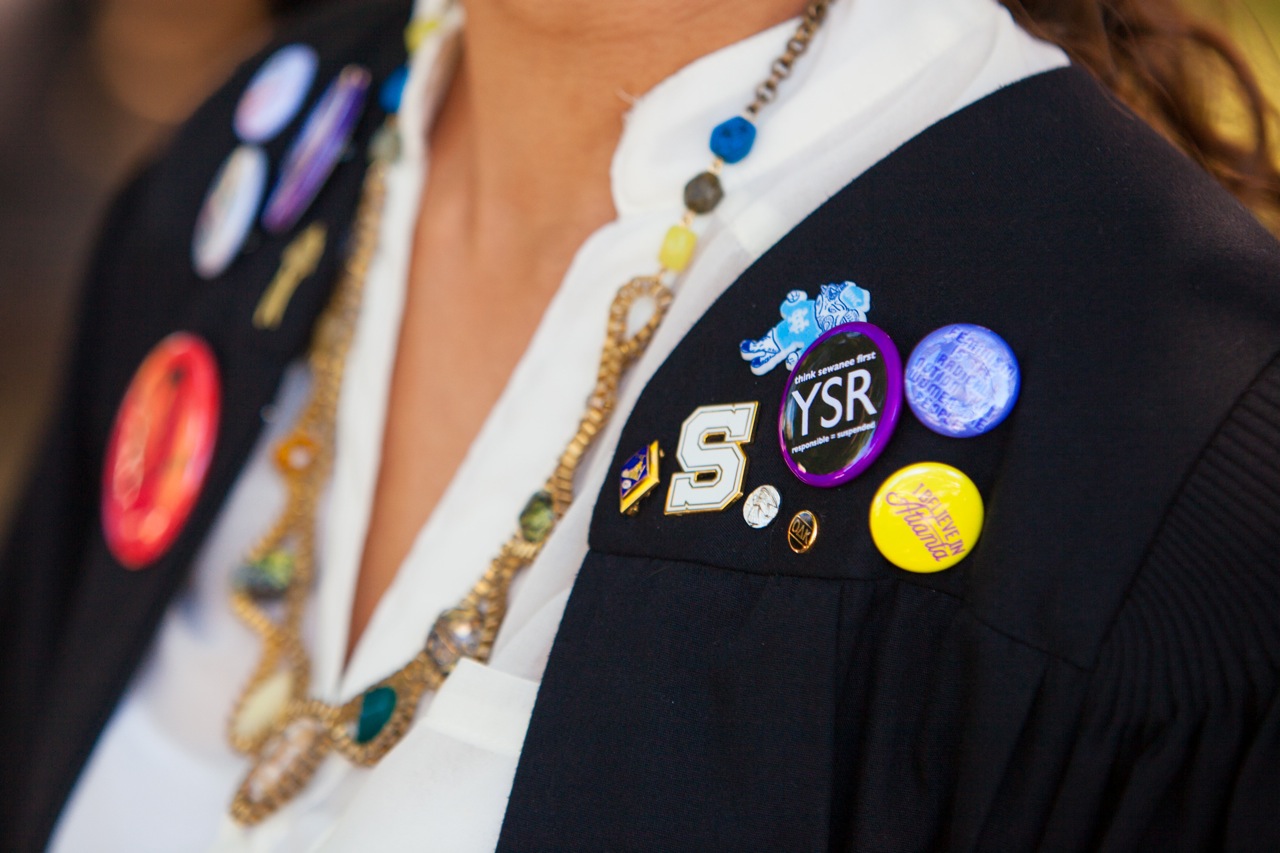
The Rev. Dr. Robert MacSwain, associate professor of theology at the School of Theology at the University of the South, will publish two new books in February 2026. Saints as Divine Evidence: The Hagiological Argument for the Existence of God (Cambridge University Press) will be released on Feb. 3, followed by the edited volume Wisdom, Knowledge, and Faith: New Essays on the Future of Theology and the Episcopal Church (Seabury Press / Church Publishing) on Feb. 7.
"I did not intend for these two books to come out simultaneously, but together they express my deep concern for testing the rational base of religious belief and the theological integrity of the Episcopal Church,” says MacSwain. “I hope that they will each contribute to the ongoing conversation about these vital topics."
MacSwain’s monograph Saints as Divine Evidence: The Hagiological Argument for the Existence of God presents and analyzes the idea that remarkably holy lives might be considered as evidence for divine reality. Drawing on multiple academic disciplines, including philosophy, theology, church history, comparative religion, and cultural studies, MacSwain explores many concepts of both "sainthood" and "evidence" in order to understand this intriguing proposal. He looks in particular at three distinct versions of the claim, which he defines as the "propositional," "the perceptual," and the "performative," and in the process he considers sainthood in terms of radical altruism, embodied religious experience, and enacted life-narratives.
Saints as Divine Evidence has been endorsed by top scholars including Sarah Coakley (Cambridge), Mark Wynn (Oxford), and Jonathan Tran (Duke). Coakley writes, "This book asks afresh what are the ‘evidences’ for God’s existence, and answers that question with painstaking attention to the often-neglected issue of the manifest holiness of the saints. Readers will find here not only an illuminating orientation to the current state of play in analytic philosophy of religion in general, but a creative stretching of its usual boundaries to include considerations of affective, moral, and spiritual efficacy. This is a book of unusual insight and suggestive theological discernment." Research for Saints as Divine Evidence was supported with grants from the Appalachian College Association and the Templeton Religion Trust.
Wisdom, Knowledge, and Faith: New Essays on the Future of Theology and the Episcopal Church is an essay collection co-edited with the Rev. Kelli Joyce, with a foreword by Presiding Bishop Sean Rowe. In this volume, 15 Episcopal theologians, ranging from senior scholars to current Ph.D. students, tell the story of how they became theologians, explain the nature of their academic work, and share their vision for the future of theology in The Episcopal Church. Contributors include Kathryn Tanner of Yale Divinity School, Katherine Sonderegger of Virginia Theological Seminary, Anthony Baker of the Seminary of the Southwest, Joy Ann McDougall of Emory University, and Thomas Holtzen of Nashotah House. Matthew Ichihashi Potts of Harvard's Memorial Church provides an afterword. In his endorsement, Bishop Allen K. Shin of the Diocese of New York writes, "The essays in this volume are not detached academic exercises; rather, they are grounded in pastoral realities and in the moral and social challenges faced by local communities and their people. What results is a theological vision that is as diverse as the number of contributors yet deeply rooted in Anglican spirituality. This is a must-read for bishops, church leaders and really anyone who is concerned with theological formation in The Episcopal Church."
Wisdom, Knowledge, and Faith will be published simultaneously in ebook, hardback, and paperback Feb. 7, 2026. Saints as Divine Evidence will initially be published in ebook and hardback Feb. 3, 2026, followed by a paperback edition in the coming months.
About Robert MacSwain
The Rev. Robert MacSwain, Ph.D., has been on the faculty of the School of Theology at the University of the South since 2009. His teaching and research combine philosophy, theology, ethics, literature, and spirituality with a particular focus on how these five disciplines interact within the Anglican tradition. He is a priest of the Oratory of the Good Shepherd, a dispersed religious community of the Anglican Communion founded at Cambridge University in 1913.